


Top Vaidik Rituals Every Karamkand Student Should Know
India’s spiritual heritage is deeply connected with ancient Vaidik Rituals that have been practiced for thousands of years. These rituals are not just religious activities; they represent discipline, devotion, positive energy, and spiritual balance. Students learning Karamkand must understand the importance of these sacred traditions because they form the foundation of Sanatan Dharma and Vaidik culture.
Today, many learners are showing interest in Hindu Vaidik Rituals to gain spiritual knowledge, perform religious ceremonies correctly, and build a meaningful career in priesthood or spiritual guidance. A strong understanding of traditional Karamkand Rituals helps students perform pujas, yajnas, and sacred ceremonies with proper Vaidik procedures.
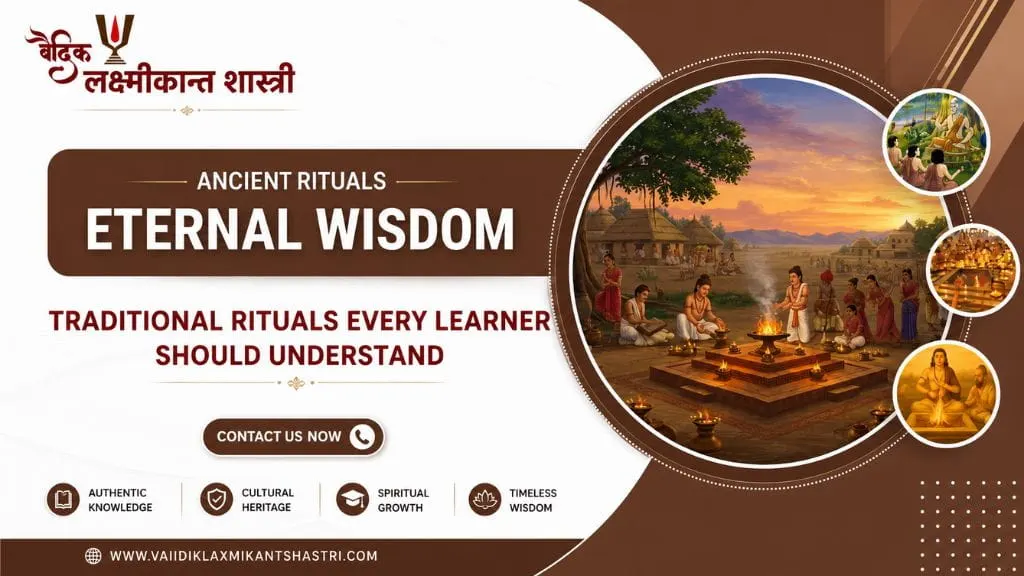
In this blog, we will discuss some of the most important Vaidik Rituals every Karamkand student should learn and practice to strengthen their spiritual knowledge and practical skills.
Sandhyavandanam
Sandhyavandanam is one of the oldest and most respected daily rituals in Sanatan tradition. It is performed during sunrise, noon, and sunset to worship the divine energy of the Sun and seek mental purity.
This ritual includes:
- Gayatri Mantra chanting
- Pranayama
- Water offerings to Surya Dev
- Meditation and self-discipline
For students studying Karamkand Rituals, Sandhyavandanam helps improve concentration, spiritual awareness, and inner peace. It is considered essential for maintaining purity in thoughts and actions.
Agnihotra Ritual
Agnihotra is one of the most ancient and powerful Vaidik Rituals practiced in Sanatan Dharma. It is a sacred fire ceremony performed using pure cow ghee, rice, and specially chanted Vaidik mantras during sunrise and sunset. In traditional Hindu culture, Agnihotra is believed to create positive spiritual vibrations that help purify both the environment and the human mind. This ritual holds a very important place in Hindu Vaidik Rituals because it connects individuals with divine energy through the power of fire and mantra chanting.
For students learning Karamkand Rituals, understanding Agnihotra is extremely important because it teaches the proper methods of preparing the havan kund, maintaining ritual purity, offering sacred materials into the fire, and reciting Vaidik mantras with correct pronunciation. Regular practice of Agnihotra is also believed to improve mental peace, concentration, spiritual discipline, and emotional balance.
Many spiritual practitioners consider this ritual beneficial for removing negativity from surroundings while promoting positivity, harmony, and inner strength. As one of the foundational Sanatan Rituals, Agnihotra helps Karamkand students strengthen their practical knowledge and deepen their spiritual understanding of ancient Vaidik traditions.
Ganesh Puja Vidhi
Ganesh Puja Vidhi is one of the most important and widely practiced Vaidik Rituals in Sanatan Dharma. Lord Ganesha is known as the “Vighnaharta,” which means the remover of obstacles, and therefore every auspicious work, religious ceremony, yajna, wedding, housewarming, or spiritual event begins with his worship. A proper Ganesh Puja begins with physical and spiritual purification. The worship area is cleaned carefully, and devotees prepare the puja samagri with devotion and discipline. The ritual usually starts with Kalash Sthapana, where a sacred pot filled with water is established as a symbol of divine energy and purity.
After this, the priest or student takes a Sankalp, which is a spiritual promise or intention made before starting the ritual. Sankalp helps the devotee focus mentally and spiritually on the purpose of the puja.
Importance of Ganesh Puja for Karamkand Students
- Builds a strong foundation in Vaidik Rituals
- Helps students learn traditional puja procedures
- Improves confidence in conducting ceremonies
- Strengthens concentration and spiritual discipline
- Develops practical knowledge of Hindu Vaidik Rituals
- Enhances understanding of Sanatan Dharma traditions
- Teaches proper mantra recitation techniques
- Encourages devotion, patience, and positive thinking
Today, the importance of Ganesh Puja continues to grow as more people seek spiritual peace and positive energy in their lives. Whether performed at homes, temples, schools, businesses, or during major religious events, this sacred ritual remains an essential part of Indian spiritual culture
Rudrabhishek
Rudrabhishek is one of the most sacred and powerful Vaidik Rituals dedicated to Lord Shiva in Sanatan Dharma. In this ritual, devotees offer holy items like milk, honey, curd, water, ghee, and bilva leaves on the Shivling while continuously chanting Vaidik mantras and Shiva prayers. It is believed that performing Rudrabhishek with devotion helps remove negativity, bring peace and prosperity, improve spiritual growth, and create mental stability.
In Hindu Vaidik Rituals, this ceremony is considered highly beneficial for achieving inner calmness, positive energy, and divine blessings. For students learning Karamkand Rituals, understanding the correct procedure, mantra pronunciation, and spiritual significance of every offering used in Rudrabhishek is extremely important because it helps strengthen their practical knowledge and spiritual discipline in traditional Sanatan Rituals.
Havan and Yajna Procedures
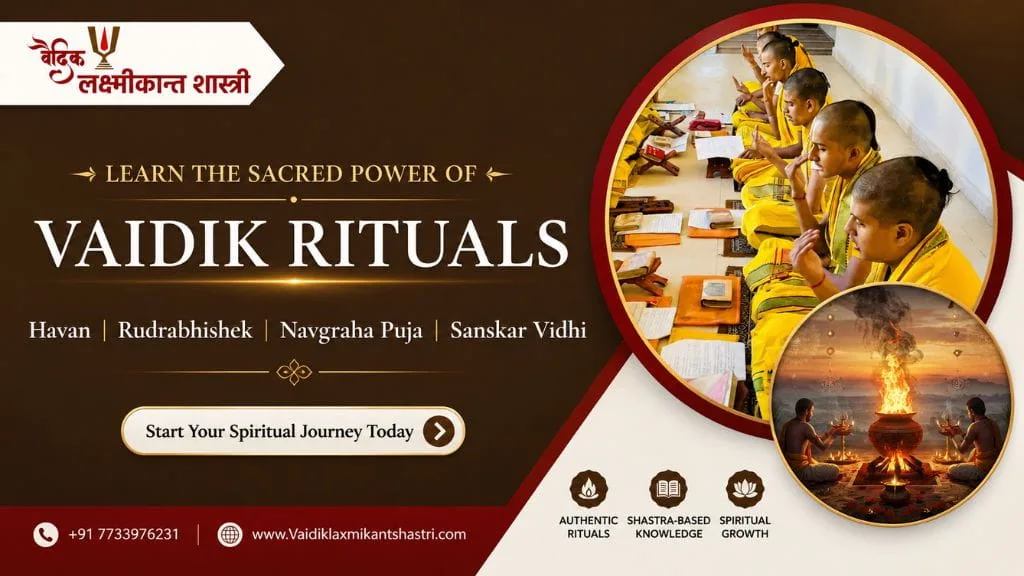
Havan and Yajna are among the most important parts of traditional Hindu Vaidik Rituals. These sacred fire ceremonies are performed for peace, prosperity, health, and spiritual purification.
Important elements of Havan include:
- Havan Kund preparation
- Proper seating directions
- Use of samagri and ghee
- Accurate Vaidik mantra chanting
- Final Purnahuti process
A Karamkand student must learn the discipline and sequence of yajna rituals because these ceremonies are commonly performed during marriages, housewarming events, and religious occasions.
Pitru Tarpan Ritual
Pitru Tarpan is a sacred ritual performed to honor ancestors and seek their blessings. In Sanatan Dharma, respecting ancestors is considered highly important for family harmony and spiritual balance.
The ritual usually involves:
- Water offerings
- Black sesame seeds
- Mantra recitation
- Prayers for ancestral peace
Understanding Pitru rituals helps students gain deeper knowledge about family traditions and spiritual responsibilities within Vaidik Rituals.
Navgraha Puja
Navgraha Puja is an important part of Vaidik Rituals and is performed to reduce negative planetary effects while strengthening positive energies in life. In Hindu Vaidik Rituals, this sacred ceremony includes the worship of the nine planets — Surya, Chandra, Mangal, Budh, Brihaspati, Shukra, Shani, Rahu, and Ketu — through Vaidik mantras, offerings, and prayers. Many devotees perform this ritual for career growth, good health, marriage harmony, financial stability, and mental peace. For students learning Karamkand Rituals, understanding the correct mantras, offerings, and spiritual importance of each planet is very important because it helps develop deeper knowledge of traditional Sanatan Rituals and planetary worship practices.
Satyanarayan Katha and Puja
Satyanarayan Puja is commonly performed in homes during special occasions and celebrations. It is dedicated to Lord Vishnu and focuses on truth, positivity, and prosperity.
This ritual generally includes:
- Kalash establishment
- Vishnu worship
- Reading Satyanarayan Katha
- Prasad distribution
- Aarti
For Karamkand students, this ritual provides practical knowledge about organizing and conducting complete puja ceremonies for families and communities.
Marriage Rituals in Karamkand
Wedding ceremonies are one of the most detailed and respected Hindu Vaidik Rituals. A Karamkand student must understand every stage of Vaidik marriage rituals because these ceremonies require precision and spiritual understanding.
Major marriage rituals include:
- Ganesh Puja
- Kanyadaan
- Havan
- Saat Phere
- Sindoor ceremony
- Ashirwad
Learning marriage rituals helps students gain practical experience in handling large religious ceremonies with confidence.
Shraddha Rituals
Shraddha rituals are performed to express gratitude and prayers for departed souls. These ceremonies are highly respected in Sanatan Rituals and hold emotional and spiritual importance in Indian culture.
Students must understand:
- Proper dates and timings
- Ritual procedures
- Mantra recitation
- Importance of offerings
Knowledge of Shraddha rituals helps Karamkand learners perform spiritual duties responsibly and respectfully.
Importance of Learning Vaidik Rituals
Learning Vaidik Rituals is not only about performing religious ceremonies but also about developing discipline, patience, spiritual wisdom, and responsibility in life. These sacred traditions connect individuals with ancient Vaidik knowledge and help preserve the rich heritage of Sanatan Dharma for future generations. By studying Hindu Vaidik Rituals, students gain deeper spiritual understanding, inner peace, improved mantra pronunciation, and confidence while performing ceremonies.
Learning Karamkand Rituals also creates professional opportunities in priesthood, spiritual guidance, and religious services. Today, many students are joining Karamkand courses to gain both traditional spiritual knowledge and modern career opportunities while staying connected to the values of Sanatan Rituals.
Conclusion
Ancient Vaidik Rituals continue to play an important role in preserving the spiritual and cultural heritage of Sanatan Dharma. For Karamkand students, learning these sacred traditions helps develop spiritual knowledge, practical ritual skills, discipline, and confidence in performing Hindu Vaidik Rituals correctly. These rituals not only strengthen devotion and inner peace but also help students stay connected with ancient Vaidik wisdom and traditional Sanatan values.
👉 Contact Us: https://vaidiklaxmikantshastri.com/contact-us/
📞 Call Now: +91 7733976231